Leaderboard
Popular Content
Showing content with the highest reputation on 02/23/22 in all areas
-
Hello everyone. I just want to thank you all and announce that Anita(my wife) and I are 50 days Nicotine-FREE!! She quit cold turkey and I have about one month of patches. Last time Anita didn't commit to quitting and I went on the journey alone. This time we both quit and for good! Wish us luck as we go forward. Thanks. I'll pop in every once in a while to keep you all posted.8 points
-
Yesterday I got a bed frame delivered and decided to put it together. It's one of those frames where you don't need a box spring just a mattress on top. Well it took me two hours to finally get it right. Something a 10 year old could probably have done in half an hour. But when I finally finished and sat down I realized that the whole time I worked on that frame I never thought of a cigarette. That for me was a first. First time without the constant thought of cigarettes felt so good. So I got out of my pajamas today and decided to find things to do to focus on something other than smoking. Staying busy does help.7 points
-
6 points
-
6 points
-
6 points
-
Great job, Sunshine. Enjoy your new bed setup (I'm impressed) and those smoke-free thoughts.6 points
-
6 points
-
5 points
-
One thing that has helped me is singing the No No song by ringo starr. Maybe you remember it, it goes: No no no no, I don't smoke it no more I'm tired of waking up on the floor No thank you please it only makes me sneeze And then it makes it hard to find the door. Now I've added a little fun into my quit. Try it you might like it!5 points
-
Staying busy AND productive does help. Not only does it distract us from the craving but we begin to feel better about ourselves. I'm glad you are doing well!5 points
-
5 points
-
5 points
-
5 points
-
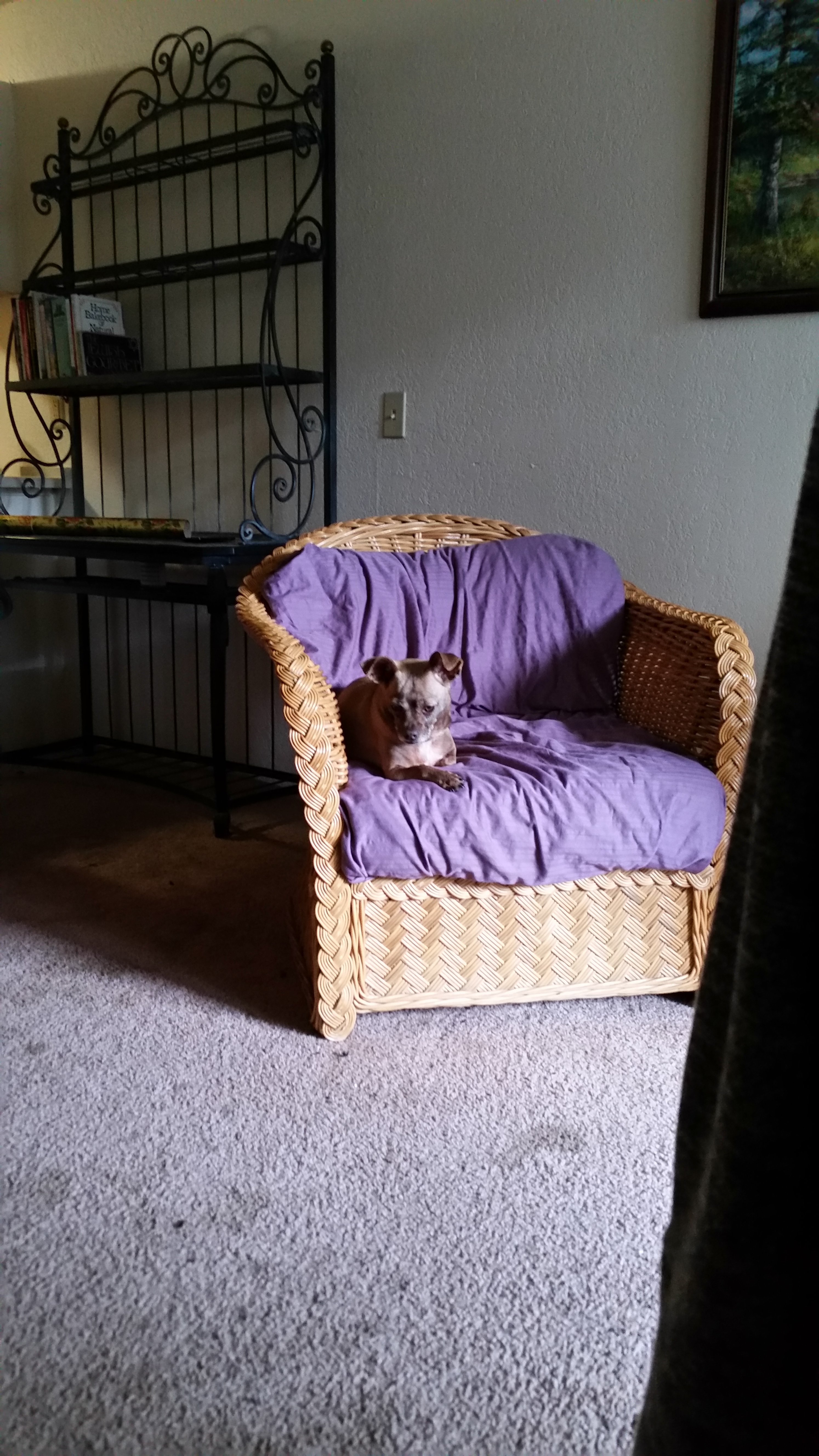
"Two puppies!" I love the idea! I've been thinking about it, too. Sofia had an expensive year with surgery, but for my 3-year anniversary...there just might be another puppy in Sofia's and my future! The puppy in this photo (in the chair, purple cover) is Sophia, aged almost 8 years old. The tiny dog my son is holding in the palm of his hand in my ... what do you call it, an avatar photo? is Marius, who passed away four years ago, today, at age 13, of heart failure.5 points
-
I remember when you first joined and were unsure that you could do it. Then Mrs. Sal said she would join you. Like they say, many hands make light work, two heads are better than one, true love always wins. I am so happy for the both of you!4 points
-
4 points
-
This is awesome @Sunshine! What a glorious day this has turned out to be for you. I hope that you have many more!4 points
-
Yay @Sunshine, I'm happy for you! That first realization that smoking thoughts DO go away eventually is awesome!4 points
-
4 points
-
4 points
-
4 points
-
3 points
-
3 points
-
3 points
-
3 points
-
3 points
-
Thanks everyone. Oh I am having a time of it today. Craves are strong at times but just having that first realization that there is some relief at times is so worth the effort3 points
-
Good for you. Its nice when you first realise there have been no thoughts of smoking. Your doing so well3 points
-
3 points
-
3 points
-
Nopester here, from long ago. I’m still not a smoker. FIVE years!!!!!!!! You guys helped me so much with quitting cigs. I was 2 1/2-3 packs a day. I cannot tell you how happy I am now. thank you3 points
-
2 points
-
Kdad I really don't have much advice to give you except to hope that this time you fight really hard for that sticky quit.2 points
-
Sometimes the train makes unscheduled stops and then you get to ride along time without interruption. Check the maps for your destination to get on the right platform. You will get there then.2 points
-
What they said. It does get easier but it won't so long as we cave to the crave. Have patience with yourself. Know and trust that it will pass. I think we can trust @jillar and @Doreensfree on that score. I am experiencing much more freedom these days so I can safely represent that. But I don't know (yet) what it feels like to be fully out of the woods. I am very vigilant. Spent about an hour on here just looking at relapse stories. Not sure why but I am really grateful for those who posted. Keeps me honest. Thank you everyone-hope your day(s) are going well!2 points
-
Yaaa....well done ...hope you enjoy your new bed It does get easier as time passes ....you just have to stay the course ..2 points
-
Heard this one on the radio this morning. Gets ol' Boo feeling sentimental every time.2 points
-
2 points
-
2 points
-
2 points
-
2 points
-
2 points
-
30 Days Smoke Free!! I want to thank everyone who has helped my wife and I get through the first 30 days. It was tough but my Wife and I were tougher! She went "Cold Turkey"and I chose the Nicotine patch route that seems to be working just fine. Thanks again and I'll keep posting along our journey to a Nicotine free life.1 point
-
1 point
-
So long as they remain nightmares, Kate, smoking dreams are protective, especially once complacency arrives. While I don't claim to be "average," during my first year I think I had 2 or 3. And for the first few years I probably averaged one a year. Now, 22 years since my last nicotine-fix, it's been 4 or 5 years since my last nightmare. But considering I was a 30-year heavy smoker (3 packs-a-day during the final 5 years) I find it amazing that while my brain is filled with hundreds of thousands of smoking memories, when constructing dreams my subconscious has only made me a smoker roughly a dozen times over 22 years. And let me tell you, my smoking dreams truly are nightmares. To set the stage, in 1999 I quit and started WhyQuit (then purely a motivational site) and in the fall started an online support site. Since then, I've presented nearly a hundred live quitting programs, have had a number of journal articles published and wrote a quitting book. So, imagine what it was like relapsing during my last dream and thereafter worrying that I had to start all over again, and that at any second I could be caught smoking and exposed. My emotional response was so disturbing that it forced me to awaken. Even then, it took a few seconds to realize that it'd all been a nightmare. That being said, my next smoking dream, if any, will again remind me just how much I relish being free. For it will be a vivid reminder of the amazing journey I once made. Breathe deep, hug hard, live long, John (Gold x22)1 point
-
In the early days of the COVID-19 pandemic, reports emerged of a novel method for managing mild cases of the disease. In field hospitals in Wuhan, patients were encouraged to practise Qigong — an ancient Chinese form of exercise incorporating focused breathing and gentle movement. But while eyebrows may have been raised among some Westerners, Albert Yeung, an Associate Professor at Harvard Medical School with a major in epidemiology, said Qigong was a helpful recovery tool for a range of diseases. "First, to put this in context, Qigong wasn't the sole treatment for people with COVID-19," Yeung said. "As a complementary treatment, Qigong is one form of mind-body exercise that helps to decrease your stress reaction, become more relaxed and produce more healthy hormones like endorphins. "When you practise Qigong you undertake slow, deep breathing which helps to regulate the autonomic nervous system ... so this helps a lot with our recuperation and self-healing." Qigong is related to the more well-known Tai Chi.(Supplied) Qigong is related to, but distinct from, the more well-known Tai Chi (Taijiquan), a martial art that has been practised in China for self-defence and health benefits since the 16th century. Byeongsang Oh, an Associate Professor at the Sydney Medical School and chief executive of the International Medical Tai Chi and Qigong Association, had studied the impact of both Tai Chi and Qigong on quality of life in cancer patients, and said they had similar health and wellbeing impacts. "My previous research shows that the practice of Qigong and Tai Chi can reduce inflammation in cancer patients and improve their overall quality of life," Dr Oh said. "After 10 weeks, in addition to standard cancer treatment, the Qigong intervention group showed improvements in fatigue, mood (anxiety and depression) and levels of inflammation biomarkers." Mental 'game-changer' Tara Brayshaw went from a high stress advertising job to starting her own Qigong and Tai Chi school.(Supplied) Tara Brayshaw is the principal of JinLi Wushu-Tai Chi, a Qigong and Tai Chi school in Melbourne. She was drawn to Qigong 28 years ago after her own cancer scare. At the time, Brayshaw worked in a high-stress advertising job with "crazy hours" and said she knew she needed to do something physical, as well as something that would help her "de-stress". "Mentally, it was an absolute game-changer for me," Brayshaw said. "It was the only thing I'd ever done in my life where I could only focus on it and nothing else. "I got out of my first class and thought, 'I haven't thought about work for an hour'. I was completely hooked." Under the tutelage of her master, Brayshaw went on to become the first woman in Australia to hold an executive role on a number of boards, including the peak body for Chinese Martial Arts in Australia, the Australian Kung Fu Wushu Federation. Citing an additional range of physical benefits, such as increased flexibility and motion through her joints, Brayshaw said finding Qigong and Tai Chi was "the greatest gift I've ever been given". Having established JinLi five years ago, she was now passionate about passing on her knowledge of the arts to her 250 students, many of whom arrived at the school looking for similar kinds of respite. A 'sense of peace' Paralympian Hannah Macdougall tried Qigong and Tai Chi after a string of unfortunate events in her life left her "flat as a tack".(ABC News: Jane Cowan) One of those students is Hannah Macdougall, a dual Paralympian and bronze medallist who has represented Australia in swimming and cycling. Macdougall, who was aiming to qualify for the 2021 Paralympic Games in Tokyo, credited Tai Chi and Qigong as one factor in producing some career-best performances over the past two years. "I took it up several years ago, after I got back from a [cycling] World Championships where I'd had a crash," Macdougall, who was born without her right foot, said. "I was injured and working through that. I put my body into a state of starvation and then put on 8 kilos, broke up with my boyfriend and found out mum had cancer." Macdougall said she heard about the benefits of Tai Chi and Qigong through a podcast, from an elite runner talking about how helpful it had been for her energy levels. "I was flat as a tack, so I googled it and found JinLi. I went along and felt so welcome in the class, it was just beautiful," she said. "I really loved how it was so different to everything I've done before in elite sport; it's slow and I'm really bad at it. "I had to put my competitive hat aside - I'm not going to be a Tai Chi or Qigong Master any time soon — but it really gave me a sense of peace." Medication through movement It's a sentiment shared by many more of Brayshaw's students. Pauline Farrell says Tai Chi and Qigong not only helps her physically, but mentally, too.(Supplied) Pauline Farrell, 71, took up Tai Chi and Qigong 14 years ago after spending a decade caring for her husband with cerebral palsy. She said she was initially interested in Tai Chi because she thought it may help with a prolapsed disc that forced her to give up tennis. "My husband also really encouraged me to do it, to get out of the house. And I felt better, I had more confidence, was fitter, stronger, my back was getting so much better, I was socialising and meeting new and lovely people," she said. "But it also helped me be a better carer for my husband: I was excited to go home after I did it, because I'd had that little break in the normality of my daily routine." Farrell's husband died seven years ago, but she continued with her Tai Chi and Qigong practice because of other benefits she had noticed, like improvements in her memory. "As I get older I need to learn to remember things. I had no idea Tai Chi and Qigong had lots of different forms," she said. "It's so hard to remember everything, [but] it's one of the reasons I keep going, because it's good for my brain." No-one can better attest to this than 35-year-old Loretta Bozelle, who sustained an acquired brain injury in a head-on car collision when she was 19. Loretta Bozelle (front) acquired a brain injury and her occupational therapist recommended Qigong and Tai Chi.(Supplied) After the accident, Bozelle had to re-learn to walk, and was heavily reliant on opioids for pain relief. She lived with a permanent weakness down the right side of her body, and said her occupational therapist recommended Tai Chi or Qigong because of its "neuroplastic" benefits. "I notice I have better awareness now, clarity and mobility," she said. I'm on pretty much the lowest dose of opioids that I have been in a fair while, and I know Tai Chi and Qigong has been a big part of that. For me, it is medication through movement." Bozelle has now commenced training to become a Tai Chi and Qigong instructor, and wants to educate others with disability or brain injury about "just how much it can offer them". "I don't think I would be here without Tai Chi or Qigong. I have seen it change my life and the lives of a lot of other people. I want to be able to give other people who are in similar situations the same opportunity as me." This is so good for putting yourself in a peaceful place ... Seek it out on You Tube ....1 point
-
Thank you everybody so much. I’ve been out of the hospital a couple days, now. The recovery is painful but he’s sure he got it all. Smoke free for one week today. Urges are grueling but hanging in there. Thanks again for all your kind words.1 point
-
1 point
-
1 point
-
1 point
This leaderboard is set to New York/GMT-05:00