
-
Posts
3702 -
Joined
-
Last visited
-
Days Won
15
Content Type
Profiles
Forums
Events
Blogs
Gallery
Everything posted by MarylandQuitter
-
Welcome aboard, Hollyleaf! I smoked for 28 years as well before I quit. The recovery timetable helped me focus and get through any cravings.
-
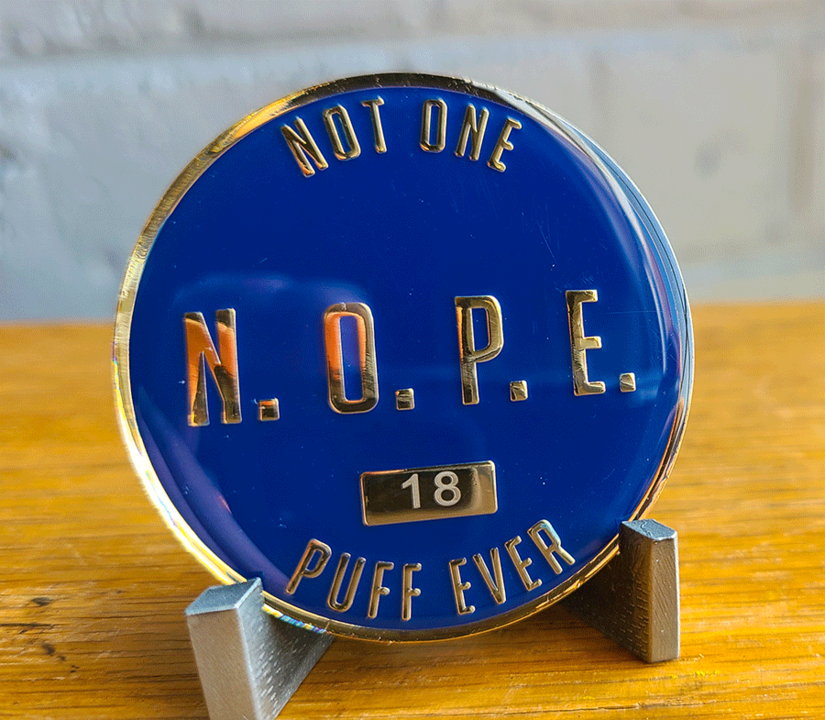
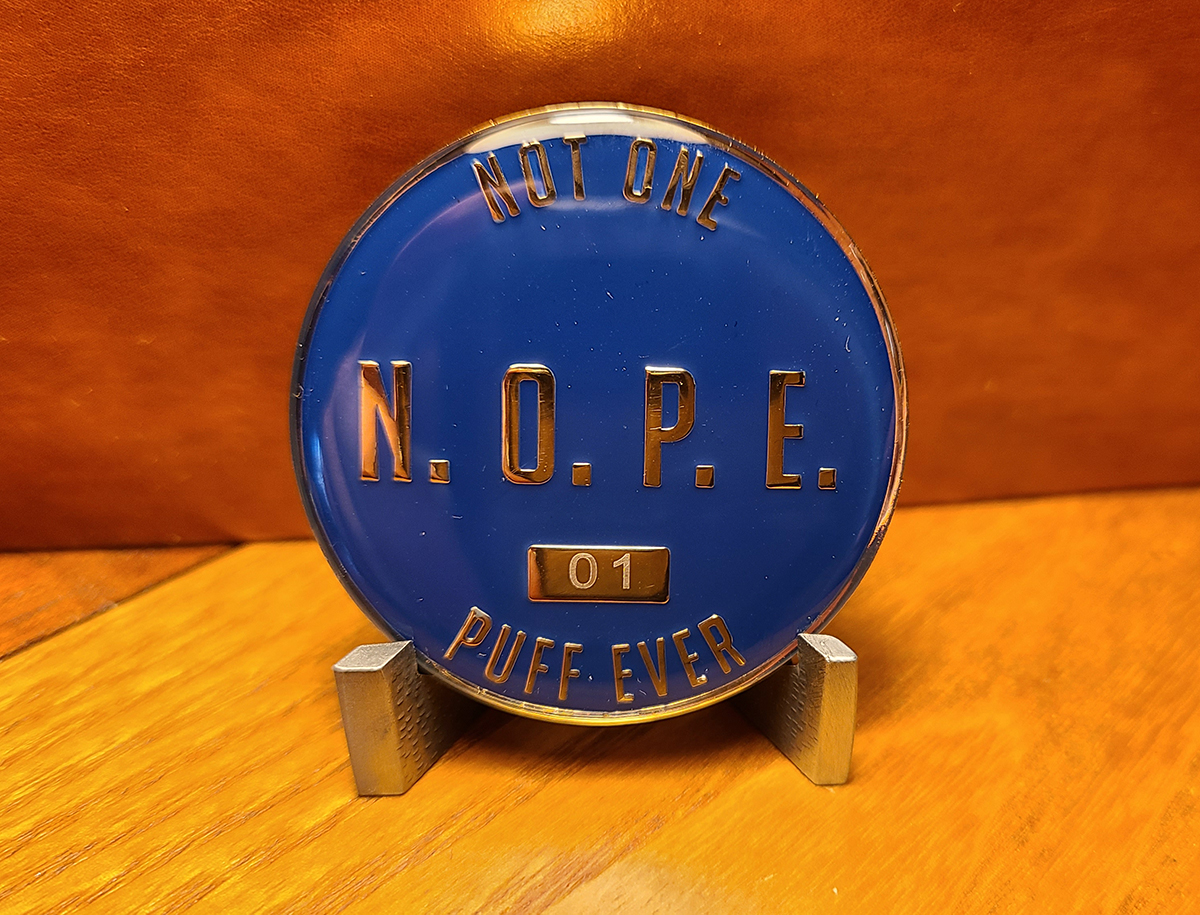
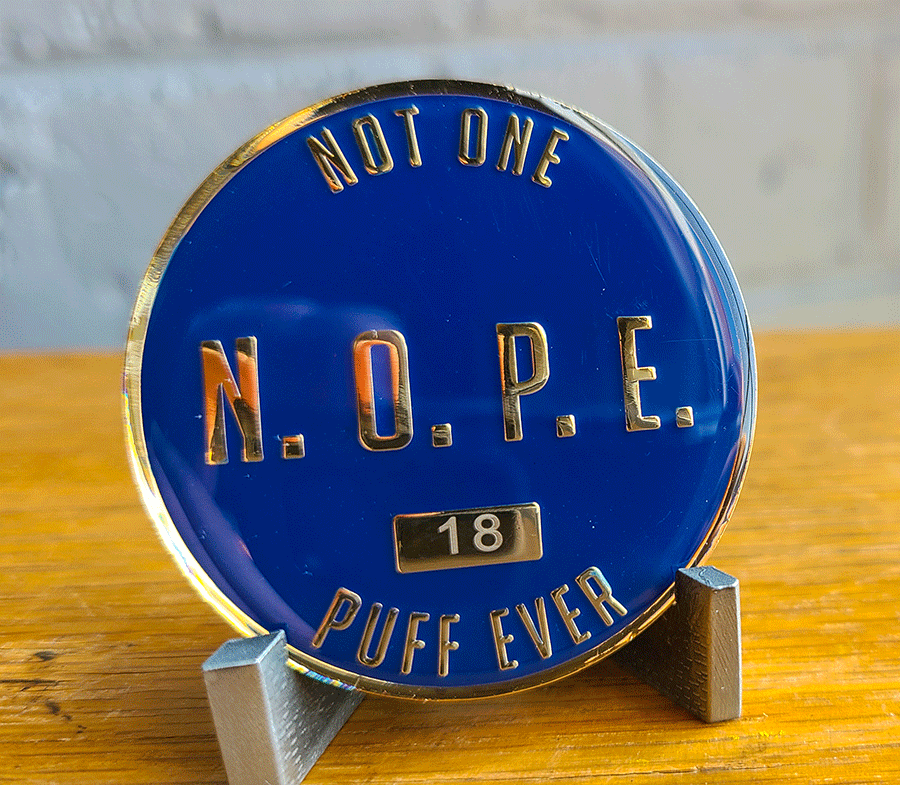
NOPE, Not One Puff Ever!
-
What "you've always done" obviously isn't a recipe for success, is it? No plan. You're not ready yet.
-
an urge is not a command to smoke
MarylandQuitter replied to babs609's topic in Quit Smoking Discussions
Hey Babs! That's good news for the new quitters. I don't even think about smoking but I'm very aware that I'm a former smoker and all it takes is one puff! -
Electronic cigarettes have hit the American market with force, and their use has increased dramatically in just a few years. The tobacco industry has gotten into the game, bringing big money into e-cigarette marketing. At ASH, we welcome products that have been proven to help smokers quit, and a number of FDA approved products are available on the market. But we are not yet convinced that e-cigarettes are indeed that type of product and we remain concerned by the lack of regulation surrounding e-cigarettes. As a science-based advocacy group, we believe there are simply too many unknowns about e-cigarettes. Here is what we do NOT know Whether e-cigs help smokers quit. There are some anecdotal stories of ex-smokers who could not quit until they tried e-cigarettes, but there is no substantiating research yet to corroborate this claim. The impact on children. According to the CDC the number of teenagers using e-cigs has doubled. Are kids now becoming nicotine addicts without ever picking up a cigarette? Will some of them switch to regular cigarettes at a later stage? We don’t know enough about what impact e-cigs have on initiation into nicotine addiction. The contents of the vapor. The marketing is aimed at making consumers think e-cigarettes just emit water vapor, but they do not. There is some strong evidence that the vapor contains toxins and carcinogens, and because there are dozens of unregulated manufacturers, it is impossible to know what exactly is being inhaled by the people who are exposed to vapor from e-cigarette users. The health impact on users. Without knowing their ingredients, we cannot know the health effects that result from e-cigarette usage or exposure. While e-cigarette companies claim they are safe, they have no scientific evidence to corroborate this claim either. Here is what we DO know E-cigarettes are aggressively marketed to children, with flavors like bubble gum and cotton candy. The marketing is disturbingly similar to past cigarette marketing that is now illegal. E-cigarettes are nicotine delivery devices. Nicotine is highly addictive, according to the National Institute of Drug Abuse (NIDA) – http://www.drugabuse.gov/publications/research-reports/tobacco-addiction/nicotine-addictive. The Food and Drug Administration is researching e-cigarettes in order to determine safe and necessary regulations (like all other products we ingest), but no official government regulations can be expected for at least three years. Here is ASH’s stance If e-cigarettes are safe, the e-cig companies should prove it. At present, they are in the business of selling an addictive drug, and they are targeting children. For now, while the safety of e-cigs remains in doubt, they should be s treated like cigarettes. This means: • No “vaping” in places that ban smoking; • No advertisements on television, radio, or billboards; • No marketing to children whatsoever; • No sales to children, with procedures in place to prevent children from buying e-cigs on the Internet; • No misleading health claims. Utah, North Dakota, New York City, and other governments in the U.S. and abroad already regulate e-cigarettes, and ASH encourages all jurisdictions to do the same. We, along with many other public health and regulatory organizations, also urge the FDA to move as quickly as possible to regulate e-cigarettes at the national level and to protect the health of everyone. Additional Information The FDA on e-cigarettes: http://www.fda.gov/newsevents/publichealthfocus/ucm172906.htm The World Health Organization (WHO) on e-cigarettes: http://www.who.int/tobacco/communications/statements/eletronic_cigarettes/en/ Studies on E-Cigarettes - E-Cig Briefing Paper - http://www.fda.gov/%20NewsEvents/Newsroom/PressAnnouncements/ucm173222.htm - http://www.cdc.gov/mmwr/preview/mmwrhtml/mm6235a6.htm?s_cid=mm6235a6_w - http://www.dkfz.de/en/presse/download/RS-Vol19-E-Cigarettes-EN.pdf - http://www.hsph.harvard.edu/news/hsph-in-the-news/tobacco-control-news-ecigarette-risks-greek-rates-decline/ - http://tobacco.ucsf.edu/e-cigarettes-release-toxic-chemicals-indoors-should-be-included-clean-indoor-air-laws-and-policies - http://legacyforhealth.org/newsroom/press-releases/new-study-investigates-online-tobacco-and-e-cigarette-advertising E-Cigarettes in the News - 45 State Attorneys General Call for Tobacco Carve Out - Dangers of E-Cigs - Chicago Bans Indoor E-Cigs - New York City Bans Indoor E-Cigs - A Hot Debate Over E-Cigarettes as a Path to Tobacco, or From It - Utah Bans E-Cigs like Cigarettes This article originally appeared on http://ash.org
-
Congrats, Deb! Welcome to our support group. So glad that you decided to quit and there was no better time than 3 days ago. Stay active and post as often as you like. We're open 24/7 and somebody is always on the board if you need anything.
-
plaw-111publ31.pdf PLAW-111publ31 This is the full publication in PDF. Below is an overview of the same. The "Tobacco Control Act" became law on June 22, 2009. An Overview Of The Family Smoking Prevention and Tobacco Control Act: Consumer Fact Sheet The Tobacco Control Act: Recognizes that virtually all new users of tobacco products are under 18 – the minimum legal age to purchase these products. Many new users will become addicted before they are old enough to understand the risks and ultimately will die too young of tobacco-related diseases. The Tobacco Control Act seeks to, among other things, prevent and reduce tobacco use by these young people. Recognizes that tobacco products are legal products available for adult use, prohibits false or misleading labeling and advertising for tobacco products and provides the tobacco industry with several mechanisms to submit an application to FDA for new products or tobacco products with modified risk claims. Gives FDA enforcement authority as well as a broad set of sanctions for violations of the law, and directs FDA to contract with states to assist FDA with retailer inspections. Note: This overview highlights some of the provisions of the Tobacco Control Act and is not intended to be a comprehensive guide or to reflect FDA’s interpretation of the Tobacco Control Act. For complete information, you must read the entire law. For your convenience, in the text below we provide the section number of the Tobacco Control Act and a link to the full text of the section. For updates on all FDA tobacco product activities, visit www.fda.gov/TobaccoProducts. For information about when certain sections of the Act go into effect, refer to the Timeline: Family Smoking Prevention and Tobacco Control Act What the Tobacco Control Act does Restricts cigarettes and smokeless tobacco retail sales to youth by directing FDA to issue regulations which, among other things: Require proof of age to purchase these tobacco products – the federal minimum age to purchase is 18 – Sec. 102 Require face-to-face sales, with certain exemptions for vending machines and self-service displays in adult-only facilities – Sec. 102 Ban the sale of packages of fewer than 20 cigarettes – Sec. 102 Allow certain exemptions in adult-only facilities – Sec. 102 Restricts tobacco product advertising and marketing to youth by directing FDA to issue regulations which, among other things: Limit color and design of packaging and advertisements, including audio-visual advertisements – Sec. 102 (However, implementation of this provision is uncertain due to pending litigation. See Discount Tobacco City & Lottery v. USA, formerly Commonwealth Brands v. FDA) Ban tobacco product sponsorship of sporting or entertainment events under the brand name of cigarettes or smokeless tobacco – Sec.102 Ban free samples of cigarettes and brand-name non-tobacco promotional items – Sec. 102 Note: Among its many provisions, the Tobacco Control Act required FDA to reissue its 1996 final regulations aimed at restricting the sale and distribution of cigarette and smokeless tobacco products. (Section 102) The Tobacco Control Act specifically: Prohibits “reduced harm” claims including “light,” “low,” or “mild,” without an FDA order to allow marketing – Sec. 911 of the Federal Food, Drug, and Cosmetic Act (FDCA) Requires industry to submit marketing research documents – Sec. 904 of the FDCA Requires bigger, more prominent warning labels for cigarettes and smokeless tobacco products. However, the implementation date is uncertain, due to ongoing proceedings in the case of R. J. Reynolds Tobacco Co. v. U.S. Food and Drug Administration, No, 11-1482 (D.D.C.), on appeal, No 11-5332 (D.C.Cir.). Packaging and advertisements for cigarettes and smokeless tobacco must have revised warning labels with a larger font size. Font colors are limited to white on a black background or black on a white background. – Sec. 201 and 204 Cigarette package health warnings will be required to cover the top 50 percent of both the front and rear panels of the package, and the nine specific warning messages must be equally and randomly displayed and distributed in all areas of the United States. These messages must be accompanied by color graphics showing the negative health consequences of smoking cigarettes. – Sec. 201 Smokeless tobacco package warnings must cover 30 percent of the two principal display panels, and the four specific required messages must be equally and randomly displayed and distributed in all areas of the United States. – Sec. 204 Gives FDA authority over, among other things: Registration and inspection of tobacco companies – Sec. 905 of the FDCA Requires owners and operators of tobacco companies to register annually and be subject to inspection every 2 years by FDA. Standards for tobacco products – Sec. 907 of the FDCA Allows FDA to require standards for tobacco products (for example, tar and nicotine levels) as appropriate to protect public health. Bans cigarettes with characterizing flavors (except menthol and tobacco). “Premarket Review” of new tobacco products – Sec 910 and 905 of the FDCA Requires manufacturers who wish to market a new tobacco product to obtain a marketing order from FDA prior to marketing that new product. “Modified risk” products – Sec. 911 of the FDCA Requires manufacturers who wish to market a tobacco product with a claim of reduced harm to obtain a marketing order from FDA. Enforcement action plan for advertising and promotion restrictions – Sec 105 FDA published a document entitled “Enforcement Action Plan for Promotion and Advertising Restrictions.” The action plan details FDA’s current thinking on how it intends to enforce certain requirements under the Tobacco Control Act. The Tobacco Control Act also requires Tobacco industry must disclose research on the health, toxicological, behavioral, or physiologic effects of tobacco use. – Sec 904 of the FDCA Tobacco industry must disclose information on ingredients and constituents in tobacco products; and must notify FDA of any changes. – Sec 904 of the FDCA How FDA oversees the implementation of the Tobacco Control Act Among other things, FDA: Established the Center for Tobacco Products to implement the Tobacco Control Act – Sec. 901 of the FDCA Established the Tobacco Products Scientific Advisory Committee to provide advice, information, and recommendations to the FDA – Sec. 917 of the FDCA Assesses user fees on tobacco product manufacturers and importers based on their market share. The fees are used to fund FDA activities related to the regulation of tobacco products – Sec. 919 of the FDCA Reports to Congress on how best to encourage companies to develop innovative products that help people stop smoking. Issues regulations and conducts inspections to investigate illicit trade in tobacco products – Sec. 920 of the FDCA Convenes a panel of experts to study the public health implications of raising the minimum age to purchase tobacco products – Sec. 104 Limits on FDA’s authority FDA cannot: Ban certain specified classes of tobacco products – Sec. 907 of the FDCA Require the reduction of nicotine yields to zero – Sec. 907 of the FDCA Require prescriptions to purchase tobacco products – Sec. 906 of the FDCA Ban face-to-face tobacco sales in any particular category of retail outlet – Sec. 906 of the FDCA The Tobacco Control Act preserves the authority of state, local, and tribal governments to regulate tobacco products in certain specific respects. It also prohibits, with certain exceptions, state and local requirements that are different from, or in addition to, requirements under the provisions of the FDCA relating to specified areas.
-
On January 11, 1964, Luther L. Terry, M.D., Surgeon General of the U.S. Public Health Service, released the first report of the Surgeon General's Advisory Committee on Smoking and Health. On the basis of more than 7,000 articles relating to smoking and disease already available at that time in the biomedical literature, the Advisory Committee concluded that cigarette smoking is— A cause of lung cancer and laryngeal cancer in men A probable cause of lung cancer in women The most important cause of chronic bronchitis The release of the report was the first in a series of steps, still being taken more than 40 years later, to diminish the impact of tobacco use on the health of the American people. For several days, the report furnished newspaper headlines across the country and lead stories on television newscasts. Later it was ranked among the top news stories of 1964. During the more than 40 years that have elapsed since that report, individual citizens, private organizations, public agencies, and elected officials have pursued the Advisory Committee's call for "appropriate remedial action." Early on, the U.S. Congress adopted the Federal Cigarette Labeling and Advertising Act of 1965 and the Public Health Cigarette Smoking Act of 1969. These laws— Required a health warning on cigarette packages Banned cigarette advertising in the broadcasting media Called for an annual report on the health consequences of smoking In September 1965, the Public Health Service established a small unit called the National Clearinghouse for Smoking and Health. Through the years, the Clearinghouse and its successor organization, the Centers for Disease Control and Prevention's Office on Smoking and Health, have been responsible for 29 reports on the health consequences of smoking. In close cooperation with voluntary health organizations, the Public Health Service has— Supported successful state and community programs to reduce tobacco use Disseminated research findings related to tobacco use Ensured the continued public visibility of anti-smoking messages Within this evolving social milieu, the population has given up smoking in increasing numbers. Nearly half of all living adults who ever smoked have quit. The anti-smoking campaign is a major public health success with few parallels in the history of public health. It is being accomplished despite the addictive nature of tobacco and the powerful economic forces promoting its use. However, more than 45 million American adults still smoke, more than 8 million are living with a serious illness caused by smoking, and about 438,000 Americans die prematurely each year as a result of tobacco use. Efforts to implement proven interventions must be continued and expanded.